Toddler Circle Time: A Survival Story
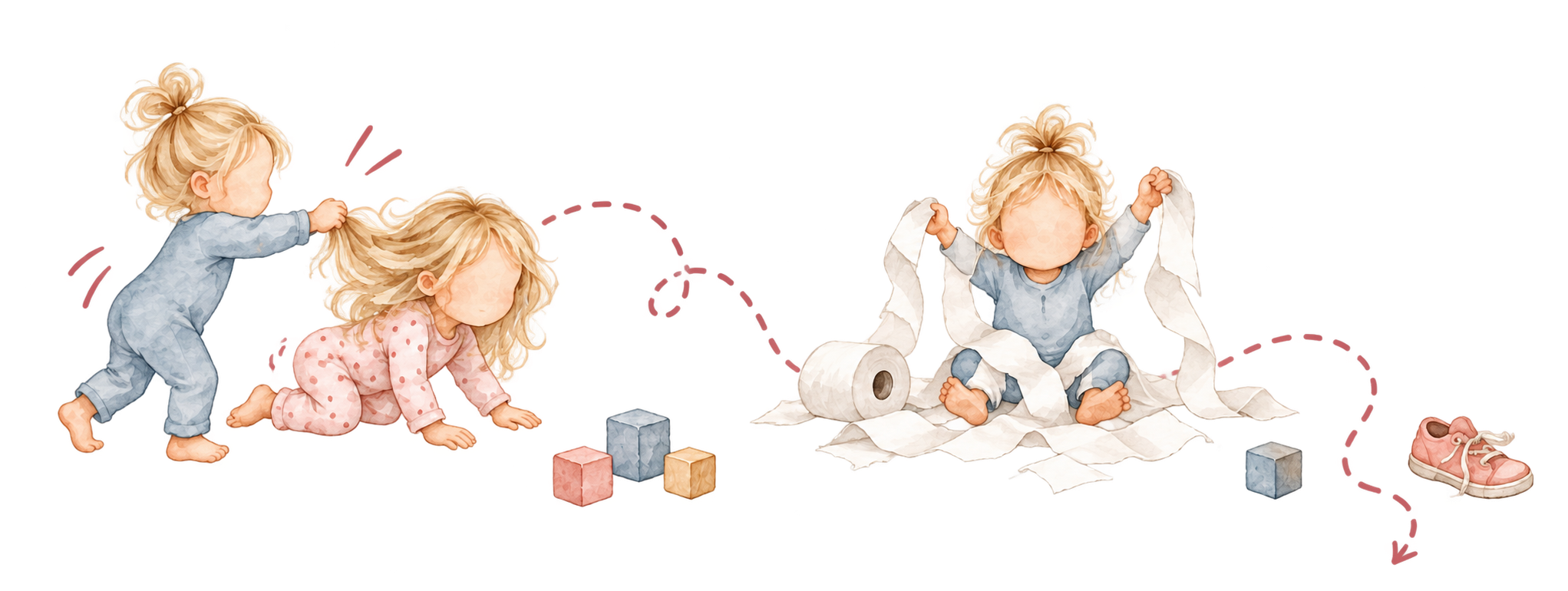
An orange circle, a blue triangle, a yellow square, and one shoelace now being held as evidence.
Don't tell me God doesn't have a sense of humor. A collection of the chaos, quotes and little moments I never want to forget.
Field notes from the front lines
This blog is for my four fiercely independent, beautifully feral girls, who came into this world completely and unapologetically themselves and have shown absolutely no interest in becoming easier to manage for anyone’s convenience.
Somehow the days can feel approximately nine years long, yet I blink and another tiny version of you has already become a memory.
I do not want those memories to fade, so I am doing the best I can to capture them here.
Fortunately, very little creative writing is required. About 99 percent of this blog is just verbatim documentation of the hilarious material you provide on a daily basis.
Someday the noise will quiet, the fingerprints will disappear from the walls, and no one will be under investigation for allegedly attempting to choke her sister with a yellow shoelace following a dispute over stolen shapes during circle time.
When that day comes, I want you to be able to read these stories, laugh until you cry, and fully appreciate just how much material you gave me.
Perhaps you will even share these stories with children of your own someday, if that is the life you choose. If so, I hope they are every bit as wildly, wonderfully themselves as you have always been, and that you get to experience the same overwhelming joy of loving tiny people you would not change for anything, even while they are actively dismantling your home.
I hope you always know that you were never an inconvenience, and you were never too much.
You have been, and will always be, the greatest joys of our lives. There is nothing about who you are that Daddy or I would ever want to change.
Loving you has been the greatest privilege of our lives, and being your parents has been our greatest honor.
We thought we were responsible for raising you, but somewhere between the diapers, the sleepless nights, the impossible questions, and the attempted sibling homicides, you started raising us too.
You have taught us about grace, forgiveness, courage, unconditional love, and the importance of separating witnesses before beginning an investigation.
Never let the world convince you that homemaking has no value or that the quiet, repetitive, largely unnoticed moments of family life do not matter. Much of this work happens without recognition, applause, or even the basic courtesy of everyone keeping their pants on.
But this is where lives are shaped. This is where character is built, confidence is protected, forgiveness is practiced, and people learn how to love one another before carrying that love into the rest of the world.
These moments are not small just because they happen behind closed doors, usually beside a load of laundry no one remembered to switch for three days and has now been rewashed four more times.
I pray you never question your worth, and I thank you for helping me remember my own.
May you never shrink yourselves to fit inside spaces that were always too small for you. The world does not need quieter, smaller, or more acceptable versions of you.
It needs you standing unapologetically in the light God placed within you, reminding everyone around you that they are allowed to step back into their own.
And if anyone ever tells you that you are too much, smile sweetly and remind them that no one is stopping them from going and finding less.
To anyone who has somehow wandered into this public collection of family memories and incriminating statements, I hope you find a little relief here too.
I hope you laugh. I hope you take a deep breath. I hope you feel seen inside whatever beautiful, exhausting, complicated stage of life you are currently trying to survive without becoming the subject of a true-crime documentary.
You are not alone. You are loved. You have always been enough, and you will still be enough tomorrow.
Sometimes life is ordinary chaos, crying in the pantry, reheating the same cup of tea four times, and forgetting why you walked into the room. Sometimes we can take a breath, laugh at the disaster, and recognize that these ordinary moments were never ordinary at all.
But sometimes life is not funny.
Sometimes it is devastating, unfair, and far too painful to be turned into a lesson about finding joy. There are people grieving children, watching someone they love suffer, facing illness, loss, betrayal, loneliness, or circumstances they never chose and cannot change. I will never ask anyone living through that kind of pain to romanticize it, search for a silver lining, or find a reason to laugh before they are ready.
Grief does not have an expiration date, and there is no perfect way to carry it. I will not pretend I can imagine the full weight of what another person is suffering. I only want you to know that I am so deeply sorry you are hurting. Your pain matters, even when no one around you knows how to hold it. You are seen, you are endlessly loved, and there is no spiritual failure in being unable to feel joy while surviving something heartbreaking.
Sometimes the most Christlike thing we can do is mourn with those who mourn. We may not be able to change someone’s circumstances, but we can sit beside them, acknowledge that it hurts, and remind them they do not have to carry it unseen.
I would also never want anyone to think my jokes are meant to make light of the very real mental, physical, and emotional burnout that can come with motherhood and raising children. The panic is real. The overstimulation is real. The guilt that follows when we lose ourselves is real, and that cycle can become a brutal place to live.
Me making light of my own experiences is how I have learned to cope with my own host of issues. It is not judgment of anyone else’s. Lord knows I have been the mother shaking and crying, begging someone to help me because I genuinely did not believe I could keep carrying everything or ever measure up to what this calling required of me.
Motherhood is hard, serious, deeply important work. For a long time, I was allowing it to destroy me because I believed I had to meet every impossible expectation while everyone else appeared to have their homes, routines, nervous systems, and entire lives beautifully under control. Meanwhile, I could not understand why things that looked so easy for other people felt nearly impossible for me. Every time I struggled, I took it as further proof that I was failing my children and my husband.
The people I love most have sometimes become the dartboards for pain they did not cause, and that truth has broken my heart. I would go to bed feeling sick over it, overwhelmed by everything I believed needed to be done, everything I desperately wanted to do, and how little capacity I actually had to do any of it.
Eventually, the negative thoughts consumed so much of my mind and body that I reached a place I felt ashamed to talk about for a long time. I began believing the lie that the people I loved would be better off without me.
But that was never true.
Our worth has nothing to do with how much we produce, how beautifully we manage our homes, how regulated we remain, or how many times we lose our minds before bedtime. Our worth was never something we had to earn.
Life has humbled me enough to realize that we rarely know what is happening behind someone else’s closed doors, or inside a heart too frightened or ashamed to admit how badly it is hurting. We do not see the burnout, the intrusive thoughts, the private breakdowns, or the battles another person is fighting just to remain here. I am thankful God humbled me enough to see how unfair it was for me to place judgment on the very people whose lives I was wasting my time comparing mine to. I was measuring my private reality against the few moments of theirs I could see, then inventing a story that they had it all together. They deserved more grace than that, and so did I.
For me, sharing the raw, unfiltered reality of our chaos has brought a peace I desperately needed. Saying the hard things out loud takes away some of their power. They may be part of my experience, but they do not get to define who I am, and they have never had the authority to determine my worth.
Perhaps that is part of why God tells us to “be still and know,” although I will admit I have always had a complicated relationship with that scripture. When you live with chronic panic attacks, or any of the biological or chemical conditions that can affect a person’s ability to feel joy, regulate their body, or even understand what stillness is supposed to feel like, the instruction to “be still” can sound like a particularly bad joke between you and God.
Add ADHD and OCD to the mix, along with a generous assortment of other fun mental illnesses for which genetics apparently found me highly favored, and you have a delightful little cocktail of relentless thoughts, nervous-system chaos, and religious scrupulosity. Then toss in the deluxe bundle of inherited family trauma and all the fascinating epigenetic consequences that came along for the ride.
It has certainly been a fun little journey discovering the many ways the Lord has given me tools to begin unpacking, understanding, and healing some of what has been passed down, while learning to “endure well” the parts that may continue tagging along. But I digress. I have informed God of my concerns about this particular character-development plan many times.
In all seriousness, I do think there is something in that reminder that I need. I become consumed by the very real demands of life until everything feels equally urgent, completely impossible, and somehow already three days overdue. Being still does not always mean feeling peaceful, emptying my mind, or suddenly gaining control of my nervous system, because what a luxurious concept that would be.
Sometimes it is only pausing long enough to remember that God already knows my limitations. He knows what my best looks like today, even when it looks nothing like yesterday’s best or anyone else’s. Maybe many of the things screaming for my attention are not nearly as important as they feel in the moment. And perhaps if God can meet us with that much understanding inside bodies and minds that do not always cooperate, we can begin offering ourselves a little of that grace too.
These are only small glimpses into parts of my own journey, and I am not claiming to have answers for anyone, let alone myself. That is not what any of this is about. God knows each person’s mind, body, history, pain, capacity, and circumstances in ways no one else ever could. Only He can offer the individual direction, help, and healing each of us needs. I would never pretend to understand what that should look like for another person when I am still being humbled daily by how little I understand about my own life.
So please know that these stories are only my own best attempt to capture and reframe some of my difficult days, a little mental survival game I have created to preserve whatever illusion remains that I am handling any of this with a measurable degree of sanity.
It is my hope that sharing what probably should have remained a very private peek into my personal journals never feels dismissive, unintentionally offensive, or hurtful to anyone else. Comedy has become one of my preferred methods of self-preservation, but I would never want my lightheartedness about my own experiences to suggest that I am making light of anyone else’s pain.
None of us can ever fully understand the experiences, suffering, or private battles another person carries where no one can see. If you are hurting in ways the people around you cannot comprehend, I am so deeply sorry. I hope you know there is room for you here exactly as you are, whether you are ready to laugh, need someone to mourn beside you, or are using every bit of strength you have just to make it through another day.
And on that note, I will return to my regularly scheduled mental survival games, continue doing my best to avoid another all-inclusive hospital stay, and intervene in what I fear may have been a premeditated toddler homicide involving a yellow shoelace.
Life is a balancing act. Unfortunately, balance was not included in my deluxe genetic inheritance package.
And as always, good luck out there, moms.
May the laundry make it into the dryer before its fourth wash cycle, and may all yellow shoelaces remain securely confiscated.
With love from the front lines,
Erica
True stories, questionable manners, and very small people with very large opinions.
And now, the stories no parenting book could have prepared me for.
An orange circle, a blue triangle, a yellow square, and one shoelace now being held as evidence.
A deeply concerning system failure, Daddy’s technical support, and one triumphant thumbs-up when operations finally resumed.
Further documentation…
“Maybe children are the kingdom of heaven because they do not wait until they are polished, productive, or presentable to believe they deserve love.”
They reach their arms up in the middle of the mess and fully expect to be held.A Note from the One Allegedly in Charge Around Here
We are a complete mess over here. A deeply loving, frequently overwhelmed, clothing-optional-against-my-will kind of mess—currently being held hostage by tiny nudists who reject both diapers and toilets but remain deeply committed to pretending they are dogs and leaving supporting evidence around the house.
This is for the mother who does not need another person telling her how to organize her life. She just needs to laugh, feel seen, and remember that she is not the only one stumbling through it.
There is no perfect rulebook for motherhood, marriage, family, or this crazy experience called mortality. Some days we thrive, some days we cry, and some days the fact that everyone is still breathing feels worthy of a commemorative plaque.
If you are still here, still loving them, still learning, and still trying again, you are doing much better than you think you are.
Welcome to the chaos. Apparently, I am taking notes.
with love, Mom
What I am learning
Families come in all shapes and sizes because life is complicated and rarely goes according to plan. Some are blended, some are rebuilding after divorce, some are held together by one exhausted person doing the work of many, and some look completely different from what the people inside them once imagined.
People are also carrying grief, illness, addiction, infertility, abandonment, estrangement, financial hardship, and private pain that no one around them may ever fully understand. Life can change without permission and rewrite everything we thought our future would look like.
I have been divorced, been a single mother, had cancer, and endured the absolute nightmare of trying to rebuild my life and date again, which could probably qualify as its own chronic condition. I now live with permanent, life-altering health conditions and have experienced ME/CFS at many different levels, from mild to severe. At its worst, I was unable to get out of bed for more than a year and a half, and there were moments when I nearly lost my life to the weight of it all.
How God sustained me through that time is a story for another day, but I know with everything in me that He did.
I only share that small part of my story because those experiences have humbled me and taught me how little I can ever truly know about what another person is carrying. Pain is deeply personal. There are physical, chemical, emotional, mental, and spiritual battles happening inside people that no one else can see.
Even two people with the same diagnosis or similar circumstances can experience them entirely differently. I will never pretend to understand the full weight of someone else’s journey, what happens behind their closed doors, what choices were available to them, or what tools they had while trying to survive.
Some people are carrying pain beyond anything I can imagine, and perhaps beyond anything I could bear. My heart and my prayers are with you.
I may not fully understand what you are going through, and no other person may be capable of understanding every part of it. But Christ does.
He knows the pain you cannot explain, the battles no one sees, and every part of your story. He sees you, He has not forgotten you, and He loves you.
I can share how Christ’s love has shaped my life without pretending my path should be everyone else’s. I am not here to decide whose family counts, whose journey is acceptable, or who is doing life the “right” way. That judgment does not belong to me, and I am certainly not qualified for the position.
What matters to me is the love, grace, safety, forgiveness, and care we offer within the circumstances we have been given. I believe Christ meets each of us right inside our real lives, not only inside the polished versions we think we are supposed to present.
This is a space for real life to be shared in all its glory, the beautiful parts, the devastating parts, the hilarious parts, the complicated parts, and the parts we are still trying to understand.
When I talk about feral women, I am not talking about one kind of woman, one kind of mother, or one kind of family. I am talking about the part of us that knows our worth without needing the world’s permission. The part that trusts the light God placed within us, laughs loudly, loves deeply, takes up space, and refuses to become smaller just to make someone else more comfortable.
Maybe that is part of what Christ meant when He asked us to become like little children. Children do not wait until they are polished to believe they are worthy of being held. They reach their arms up and expect to be loved right in the middle of the mess.
We think we have been given the responsibility of raising them, but somewhere between the sticky hands, impossible questions, forgiveness, laughter, and starting over, we realize they are raising us too.
They are reminding us how to be present, how to trust, how to receive love before we believe we have earned it, and how to fully embrace the person God created us to be.
Maybe these feral children were never meant to be tamed into smaller, quieter, more acceptable versions of themselves. They were entrusted to us so we could guide them, protect their light, and help them remain fully and unapologetically who God created them to be.
And maybe remembering and reclaiming that same truth within ourselves is part of how we change the world alongside them.
Some days these moments do not feel extraordinary. Some days they feel like something we are barely surviving. But there is nothing ordinary about them. Every apology, every act of forgiveness, every time we choose love, and every moment we help a child recognize their worth is shaping a life, changing a generation, and quietly altering the course of history.
Christ has always worked this way, one person at a time, one heart at a time, one seemingly ordinary moment at a time.
Maybe our children were never sent here for the world to change them. Maybe they were sent to change the world, while leading us back to who God created us to be.
Life is a balancing act.
Apparently, mine is balanced somewhere between spiritual reflection and breaking up another alleged toddler homicide attempt that I am increasingly afraid was premeditated, leaving me both oddly impressed by the level of careful planning and deeply disturbed on a regular basis.
I cannot promise you advice, answers, or anything resembling a functional routine. But if you landed here, even for a moment, I hope you feel seen, loved, and a little less alone, and maybe find enough comic relief to take one more deep breath before someone starts screaming again.
And as always, good luck out there, mothers. May God grant us the help we need to raise these children into a powerful force for good, because some days the only other reasonable explanation is that we are witnessing the early formation of a highly organized criminal enterprise.
With love and very little remaining executive functioning, if any,
Erica
Free Resources
The joys of ADHD: I make calm, organized printables so I can enjoy the illusion of having my life together without confronting any of the messes that actually need my attention.
For parents and autistic girls
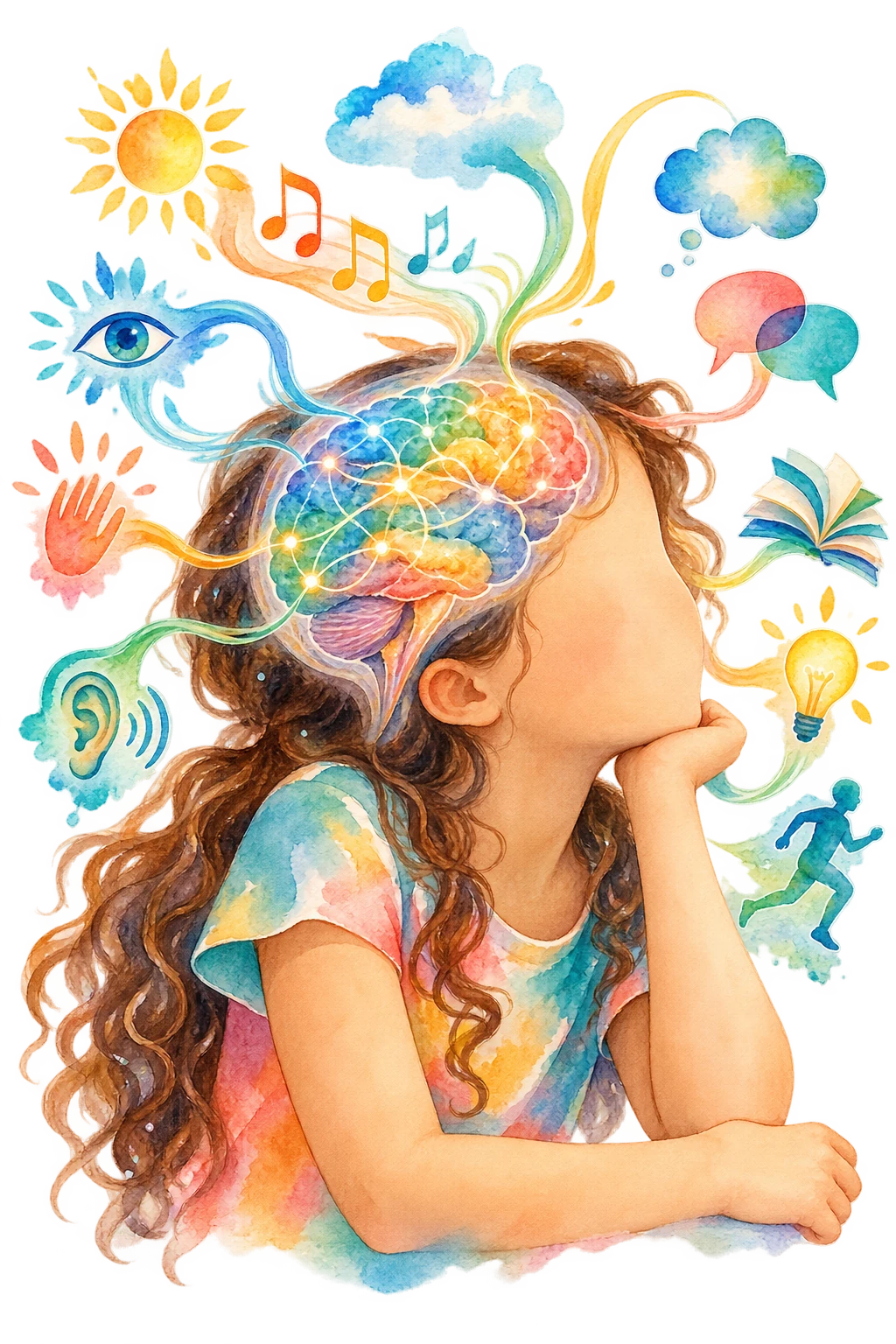
I first made Autism & Me for my own girls. I wanted short, visual lessons that could help us talk about how our brains and bodies work, what sensory experiences can feel like, and what tools might help.
Because I’m raising girls, I made it with autistic girls in mind. Every girl and every family is different, so I don’t expect it to describe everyone’s experience. I’m sharing it in case another girl finds useful words for what she feels, notices what helps her, or has an easier starting point for talking with a grown-up.
Now all eight lessons are right here on this page, with a free printable PDF for each one. They explore the brain, senses, body signals, everyday body systems, food, helpful supports, and how to ask a clinician about supplements.
Read the eight lessons belowA mother-made resource for curiosity, body awareness, and finding tools that fit each girl’s unique journey.
Eight short lessons
Read together on this page or print one lesson at a time. The child-facing ideas come first, followed by a parent note and reliable sources.
For my family, faith is part of this journey. I believe God designed our bodies with a capacity to heal through Him, in His name and in His timing, and gives each of us wisdom, tools, and direction for our unique journey.
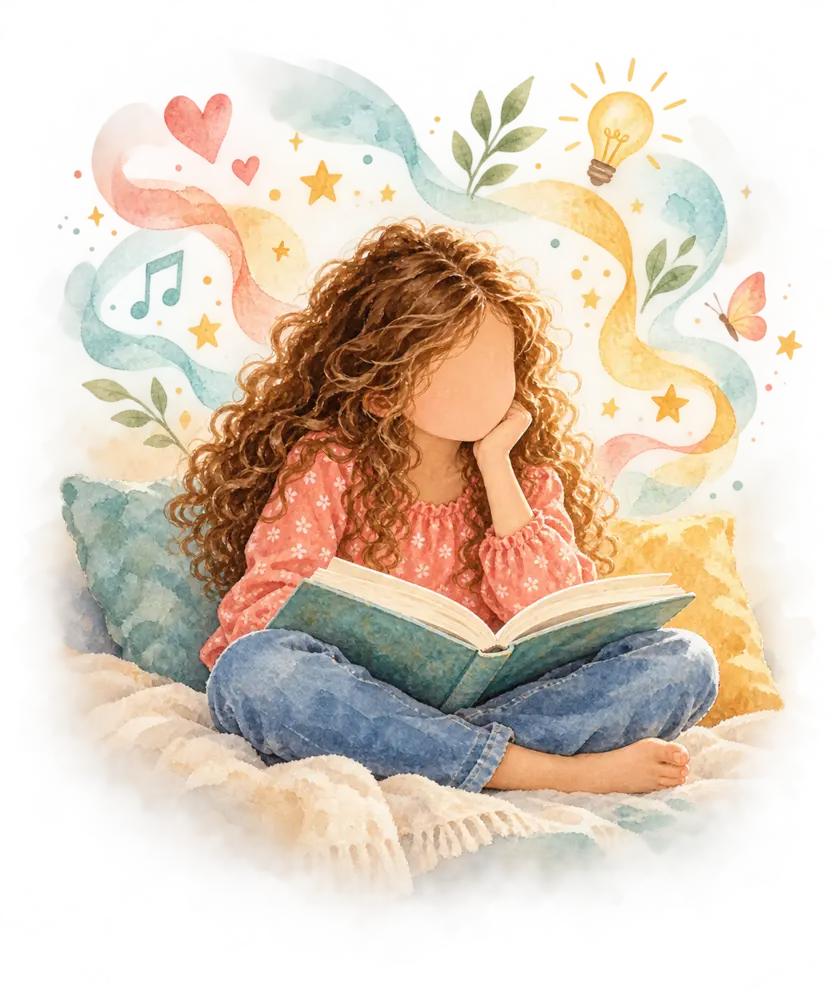
Lesson 1 · about five minutes
Learning about ourselves can help us ask for the support we need.
Autism is a way the brain develops. It can shape what we notice, how we communicate, and how we learn. Every autistic person is different.
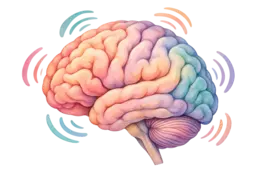
Many brain parts share messages
Sensory, attention, language, and planning networks share messages and shape how each person notices, learns, communicates, and responds. Brain research finds different patterns across people; every girl's brain has its own strengths and needs.
Name one thing you enjoy learning about, or one thing your brain notices quickly.
Remember: Autism is a beautiful part of who I am. Understanding my body helps me find tools that support the way I uniquely experience the world.
“I will praise thee; for I am fearfully and wonderfully made.”Psalm 139:14
A true thing about me: I love myself exactly as God made me. Autism is part of my story, and my story is bigger than one word.
Autism is a neurodevelopmental difference, and autistic girls have a wide range of communication, sensory, learning, and support needs. Research explores how brain networks grow and connect; findings describe patterns across groups, while every girl's strengths and needs are individual.
Sources: NIMH, Autism Spectrum Disorder Review, brain imaging findings vary across autism studies
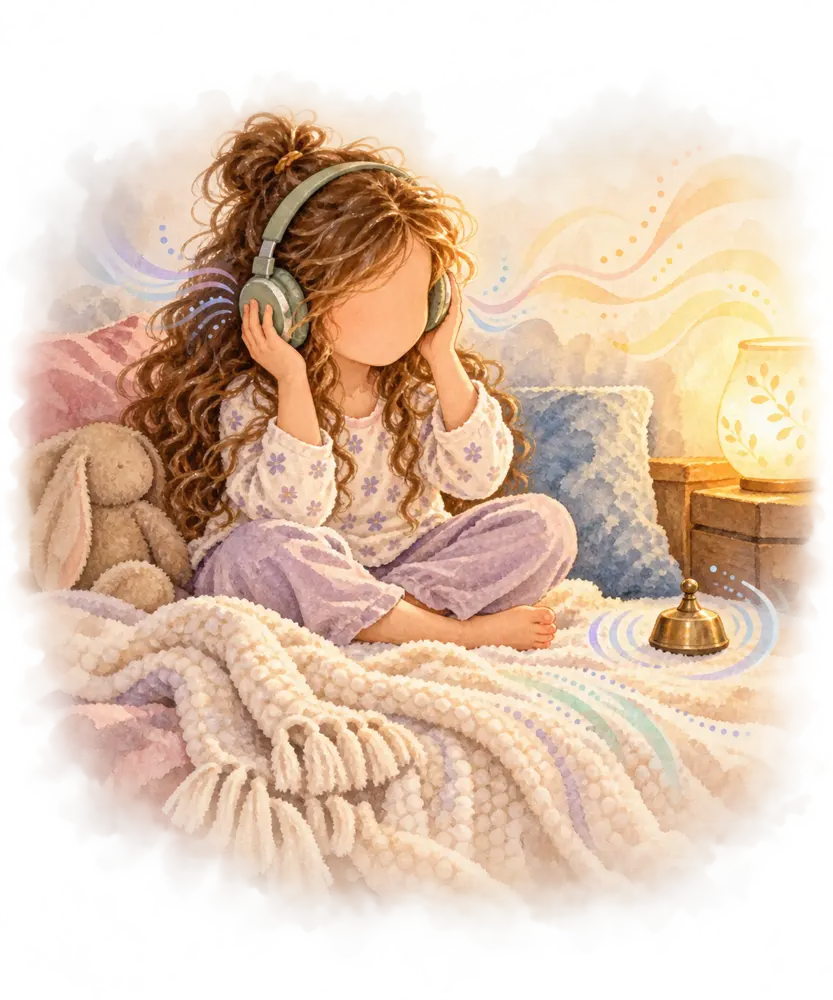
Lesson 2 · about five minutes
My brain gathers information from all around me.
My brain receives messages from sounds, lights, touch, movement, smells, words, and changes. Some messages may feel extra strong or take more time to sort.
A sensory team routes and sorts signals
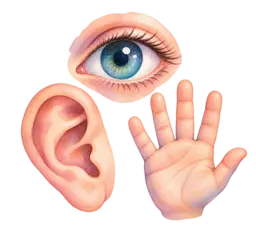
Eyes, ears, and skin begin different signals. A deep relay called the thalamus routes many messages toward sensory areas. Connected networks help combine and prioritize them. Sensory experiences vary from person to person.
Choose one sense. What is one thing that feels comfortable to you, like a quiet sound or a soft texture?
Remember: People can sense the same room in different ways. I can tell someone what feels comfortable to me.
“The spirit and the body are the soul of man.”Doctrine & Covenants 88:15
A true thing about me: My brain and body work together. I can learn what helps me.
Autistic girls describe many sensory patterns. Some notice light, color, sound, clothing, movement, or temperature very intensely; others experience those same things differently. Her own descriptions and preferences are the best guide to the supports that may help.
Sources: NIMH, Autism Spectrum Disorder NIMH, sensory hypersensitivity research update (2024)
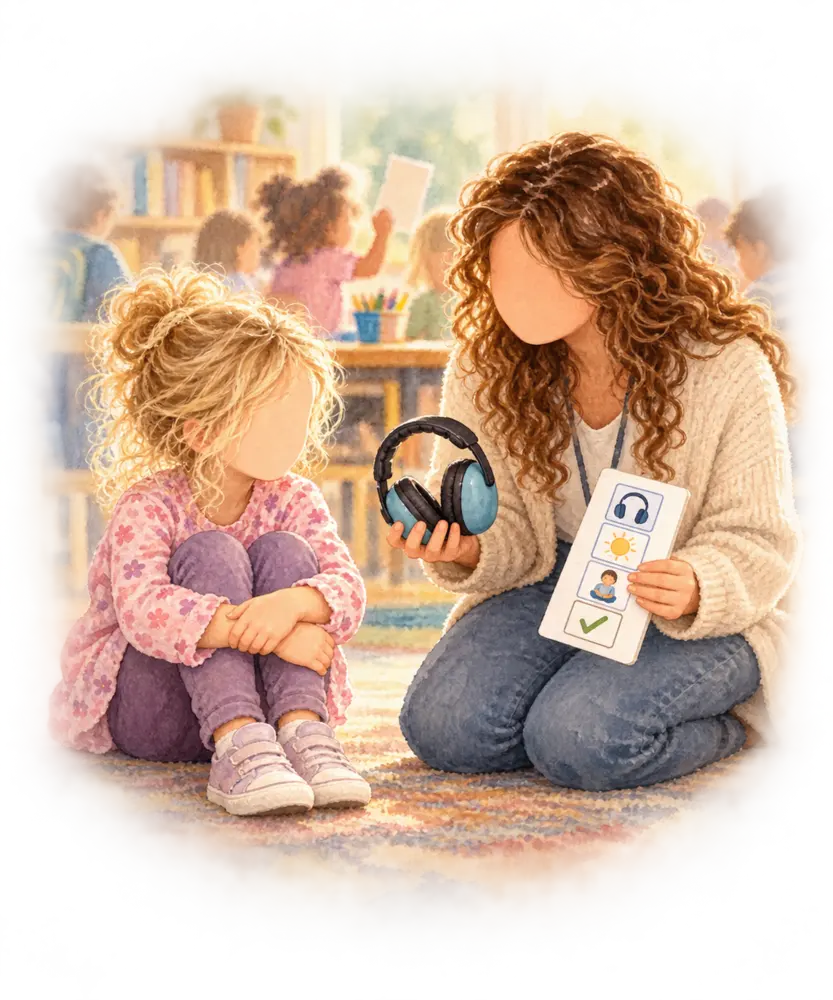
Lesson 3 · about five minutes
A busy moment can make my body feel on alert.
A loud room, a scratchy texture, or a surprise change can feel like too much. Stress is a body signal, not bad behavior.
A big moment can turn on the body alarm
When something feels too strong or surprising, the brain’s salience networks and automatic nervous system can shift into alert. The amygdala is one team member, not the whole system. Heartbeat, breathing, and muscles may change.
Pick one support to try: a quiet break, headphones, a picture of what comes next, fewer words, or asking for help.
Remember: I can say: “Too loud,” “I need a break,” or “Please explain it another way.”
“Come ye yourselves apart … and rest a while.”Mark 6:31
A true thing about me: Breaks are okay. I can ask for help when things feel like too much.
A stress response is a normal body process, not proof that a child is choosing to misbehave. No one brain structure explains a meltdown or shutdown. Consider sensory load, communication access, surprise, pain, fatigue, and what happened just before the change.
Sources: NIMH, Autism Spectrum Disorder CDC, Treatment and Intervention for Autism
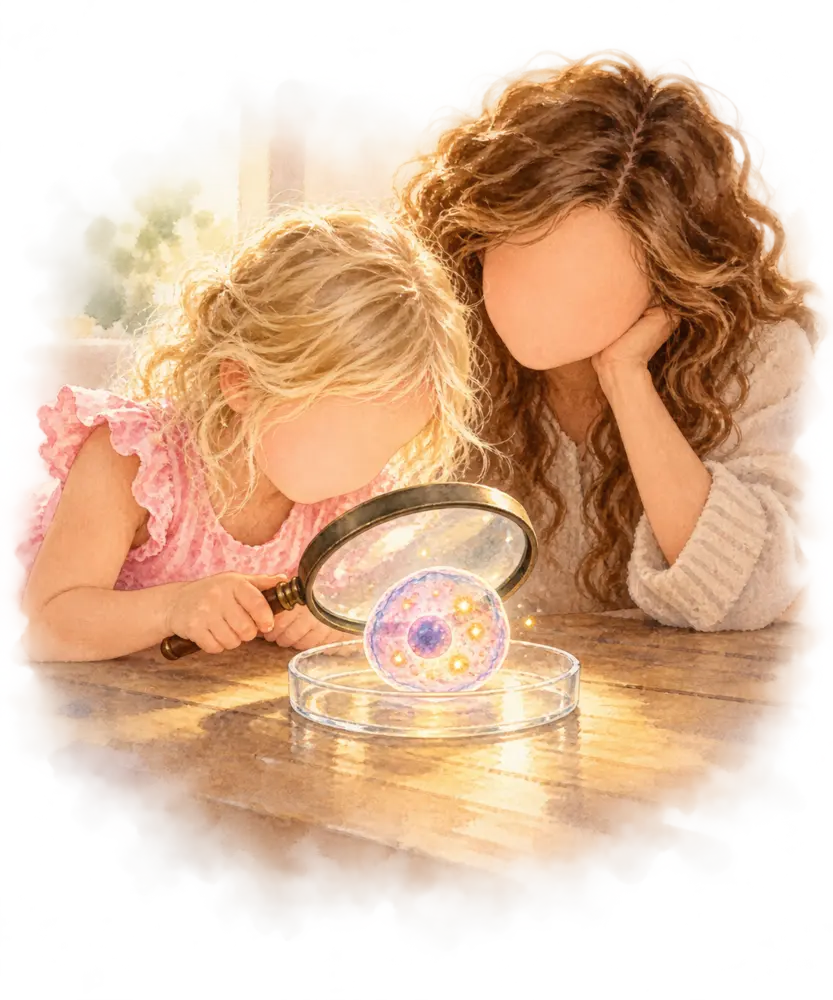
Lesson 4 · about five minutes
A science idea researchers are still studying.
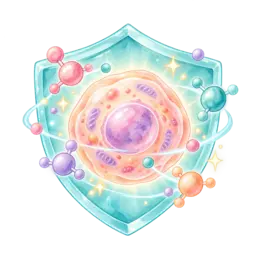
Cells use food and oxygen to do their jobs. Normal cell work makes tiny byproducts, and the body has systems that help keep things balanced.
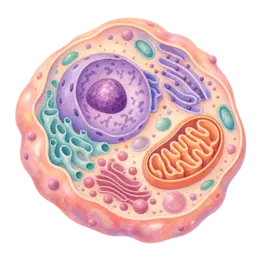
Cells make energy and keep a balance
Mitochondria help cells use nutrients and oxygen to make energy. This normal work also makes reactive molecules. Enzymes and antioxidant systems, including glutathione, help keep them balanced.
Imagine a tiny workshop: it makes something useful and has a way to tidy ordinary leftovers.
Remember: Oxidative stress is one way scientists study how cells keep their balance. My everyday needs and feelings deserve care, too.
“With all thy getting get understanding.”Proverbs 4:7
A true thing about me: I can be curious about how my body works.
Scientists are studying oxidative balance, glutathione, and immune signaling, including questions about neuroinflammation, in autistic groups. Some studies report average differences in these markers, and findings vary across studies and people. This is one reason families ask about antioxidant foods, sleep, movement, and targeted supplements; research on which approaches may help which person is still developing. A girl's symptoms, health history, and nutrition are useful starting points for an individual conversation with her clinician.
Sources: Liu et al., Oxidative Stress in Autism Spectrum Disorder: Current Progress of Mechanisms and Biomarkers (2022 review) Volk et al., Atypical cytokine profiles in people on the autism spectrum (2026 systematic review and meta-analysis) Chen et al., Oxidative stress marker differences in children with autism (2021 meta-analysis)
Lesson 5 · about five minutes
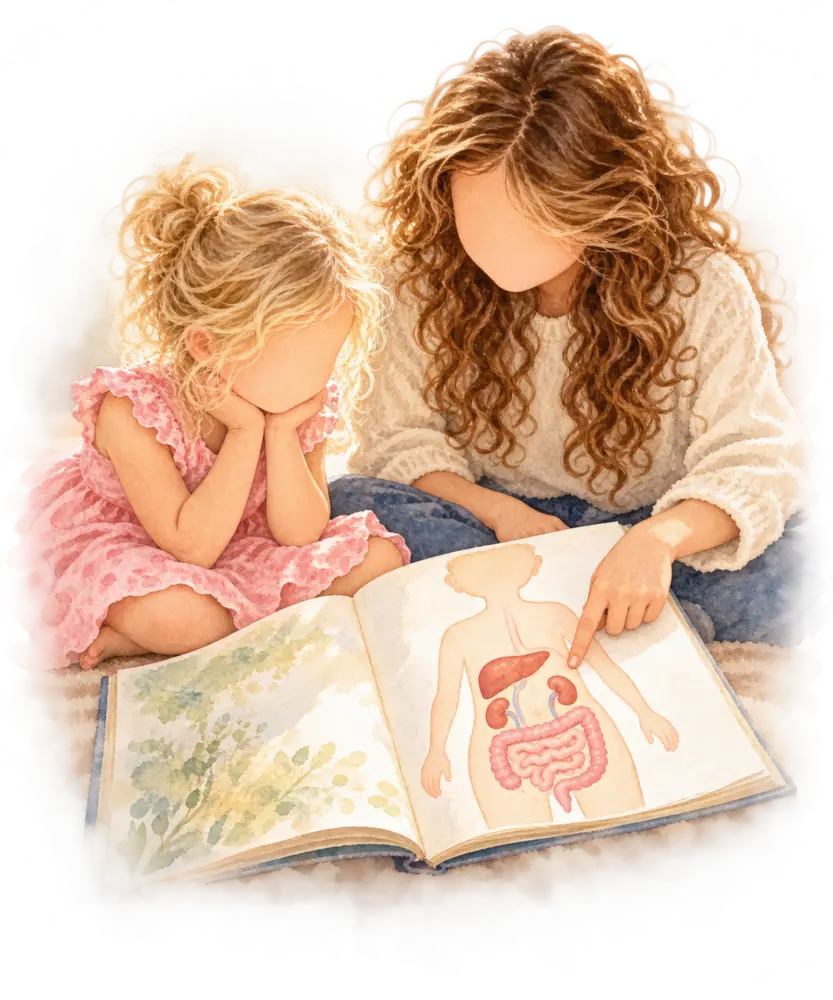
My liver, kidneys, and gut do important jobs.
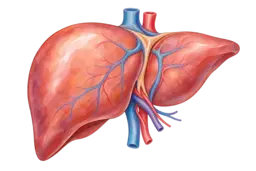
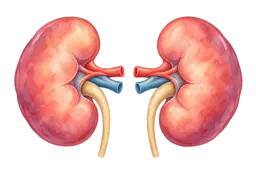
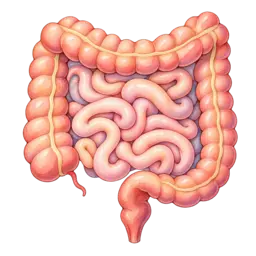
My liver, kidneys, and gut each do important jobs to help process food and move waste through my body.
The liver, kidneys, and gut work as a team
The liver processes many substances. The kidneys filter blood and help balance fluids; some waste leaves in urine. The digestive tract moves food along and stool out. Together, these are some of the body's everyday processing and clean-up pathways.
Match each helper to its job: liver—changes substances; kidneys—filter blood; gut—moves food along.
Remember: My body has many helpers working together every day, and I can learn what helps me feel cared for.
“The worth of souls is great in the sight of God.”Doctrine & Covenants 18:10
A true thing about me: My worth does not change on hard days.
The liver, kidneys, and digestive system process substances and move waste as part of ordinary body function. In wellness conversations, this is often called detoxification or pathway support. Research is exploring whether some autistic people have different needs in areas such as digestion, nutrient status, or oxidative balance; each person's health picture is individual. Nutrition, hydration, fiber, sleep, movement, and care for symptoms are practical foundations. Families who are interested in additional approaches can discuss the goal, options, and safety plan with a clinician who knows the child.
Sources: NIDDK, Your Kidneys and How They Work NIDDK, Eating, Diet, and Nutrition for Constipation in Children American Academy of Pediatrics, Complementary and Integrative Therapies for Autism (updated 2026)
Lesson 6 · about five minutes
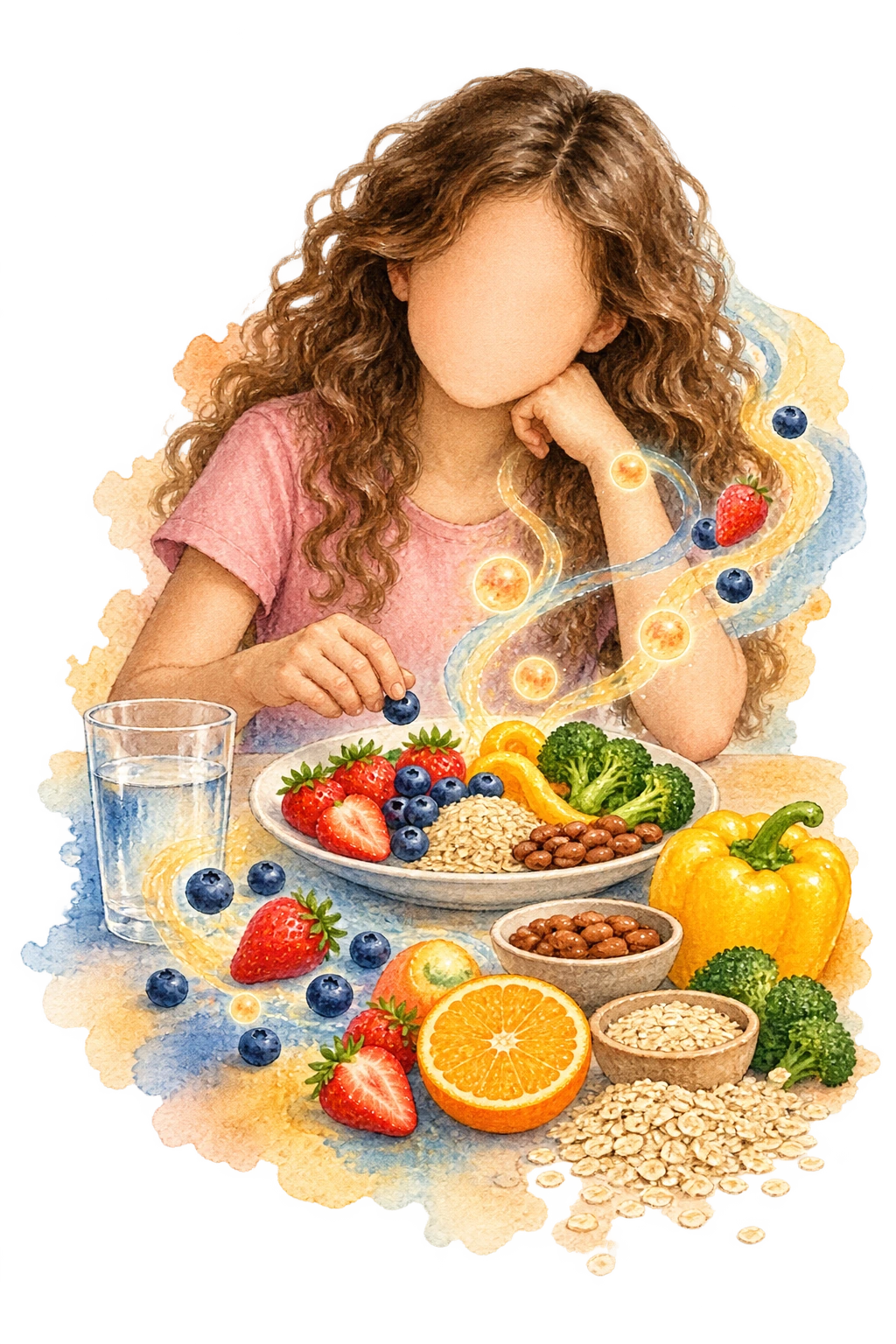
Food gives my body nutrients for everyday jobs.
Food and water are tools that help my body do its everyday jobs. Different foods bring different helpful parts.
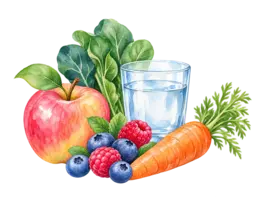
Food, water, and body helpers
My gut breaks food into small parts. Blood carries nutrients and water to my cells. My liver processes many substances, my kidneys help balance fluids and filter blood, and my gut moves stool out. Food, water, and the body's own pathways all play a part in everyday care.
Strawberries, oranges, sweet peppers, and broccoli provide vitamin C, which is part of the body's antioxidant defenses. Broccoli, cabbage, and cauliflower contain plant compounds, including sulforaphane precursors, that researchers study for how they support cellular defense pathways.
Oats, beans, pears, berries, and vegetables can provide fiber. Fiber and enough fluid help stool move comfortably. Regular drinks support hydration, and the kidneys help balance fluids and filter blood.
Beans, lentils, tofu, eggs, nuts, seeds, poultry, and meat bring protein. The body uses amino-acid building blocks from protein, including cysteine, glycine, and glutamate, to make glutathione for everyday cell work.
Glutathione is a helper our cells make from building blocks in food. It helps cells with everyday reactions and antioxidant protection. Scientists are studying glutathione in autistic groups and exploring what different patterns may mean. Every person's body and needs are unique.
Food variety can be limited by sensory preferences, pain, constipation, chewing/swallowing needs, anxiety, or access. Familiar foods count. A new food can be nearby without tasting it.
Draw or name a meal you like. A new food can sit nearby without needing to taste it.
Remember: Exploring food can happen one small step at a time. No pressure to eat everything.
“To strengthen the body and to enliven the soul.”Doctrine & Covenants 59:19
A true thing about me: I can keep familiar foods and explore new ones at my own pace.
Food, water, and digestion all support everyday body pathways. Citrus fruit, strawberries, sweet peppers, and broccoli bring vitamin C; oats, beans, pears, berries, and vegetables add fiber; protein foods provide amino-acid building blocks the body uses to make glutathione. Broccoli-family plant compounds such as sulforaphane are being studied for how they support cellular defense. Research has also explored antioxidant and glutathione supplements, with study sizes and results varying. Some autistic people have nutrition gaps, especially when food choices are limited; a clinician and dietitian can help identify an individual's needs and options.
Sources: Al-Beltagi et al., Nutritional management and autism spectrum disorder (2024 review) American Academy of Pediatrics, Complementary and Integrative Therapies for Autism (updated 2026) NIH Office of Dietary Supplements, Vitamin C NIDDK, Eating, Diet, and Nutrition for Constipation in Children MedlinePlus, Protein in Diet NIDDK, Your Kidneys and How They Work Chen et al., Oxidative stress marker differences in children with autism (2021 meta-analysis) Williams et al., Glutathione, vitamin C, and cysteine in autistic children (2025 pilot trial) Magner et al., Sulforaphane treatment in children with autism (2023 trial) NIH NCCIH, Dietary Supplements for Children and Teens
Lesson 7 · about five minutes
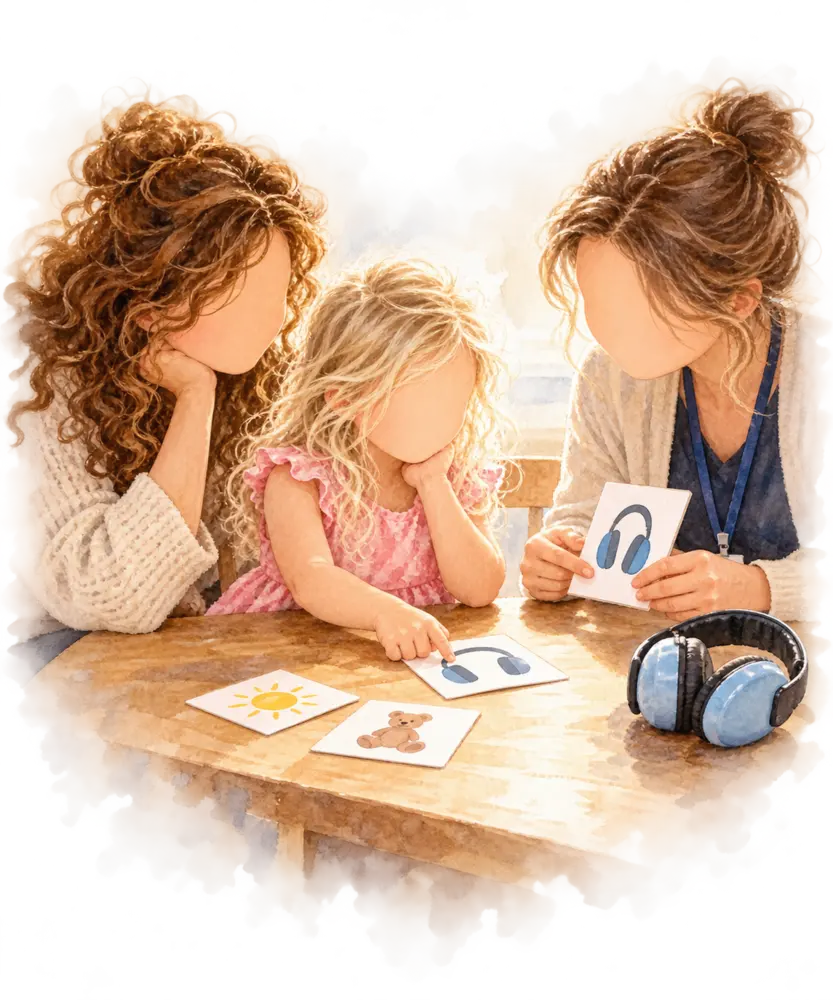
The best support starts with what matters to me.
Speech-language support, occupational therapy, visual school supports, or help with anxiety may support real-life goals. A clinician can also check sleep, pain, and digestion.
A support adds a tool where it helps
Start by naming a goal or a hard moment. Choose a tool with the girl and her trusted people, try it in the setting where it matters, then ask whether it helped her do what she wanted.
Choose one thing you would like help with: communication, sensory comfort, school routines, sleep, or stomach concerns.
Remember: Good support listens to me and checks whether it is actually helping.
“Bear ye one another’s burdens.”Galatians 6:2
A true thing about me: I can let trusted people help me.
Supports can work together and should reflect the child's goals, comfort, and autonomy. Options may include speech-language services, AAC, occupational therapy for daily living goals, school accommodations, feeding or mental-health support, and gentle mind-body practices such as music, breathing, prayer, or movement. These practices may support relaxation, comfort, or connection; evidence and goals vary by approach. The child's experience, safety, and goals can guide what families explore.
Sources: CDC, Treatment and Intervention for Autism American Academy of Pediatrics, Complementary and Integrative Therapies for Autism (updated 2026) NIH NCCIH, Autism and Complementary Health Approaches

Lesson 8 · about five minutes
Learn about options with a trusted grown-up and clinician.
Supplements can add nutrients or other support to the body. A trusted grown-up can help me learn what a supplement is for and how to use it safely.
A supplement decision has steps
A clinician can review the concern, eating pattern, symptoms, medicines, and whether testing is useful. Then you can decide together if a supplement is needed, how to use it safely, and when to check in.
Practice asking: “Why would I take this? What should we watch for? When will we check if it helps?”
Remember: I can ask questions and make health choices with a trusted grown-up.
“If any of you lack wisdom, let him ask of God.”James 1:5
A true thing about me: My questions matter. I can make health choices with people I trust.
Families ask about supplements for many reasons, including a confirmed nutrient gap, digestion, sleep, or support for antioxidant pathways such as glutathione. Research on NAC, glutathione, vitamin C, sulforaphane, and other approaches is active; study sizes, goals, and results vary. A small 2025 pilot of glutathione alone or with vitamin C and NAC did not find changes in the outcomes it measured; this is one early data point in a developing field. Group findings can guide questions, while a child's nutrition, symptoms, health history, and preferences guide an individual plan. Supplements may interact with medicines or affect fluid and nutrient balance, so a clinician or pharmacist can help choose a product, dose, and follow-up that fit the child.
Sources: NIH NCCIH, Autism and Complementary Health Approaches American Academy of Pediatrics, Complementary and Integrative Therapies for Autism (updated 2026) American Academy of Pediatrics, Where We Stand: Vitamin Supplements for Children Chen et al., Oxidative stress marker differences in children with autism (2021 meta-analysis) Williams et al., Glutathione, vitamin C, and cysteine in autistic children (2025 pilot trial) NIH NCCIH, Dietary Supplements for Children and Teens
This family learning resource is here to support curiosity, body awareness, and helpful conversations. Every girl's body and journey are unique. A trusted clinician can help with questions about symptoms, nutrition, or supplements.
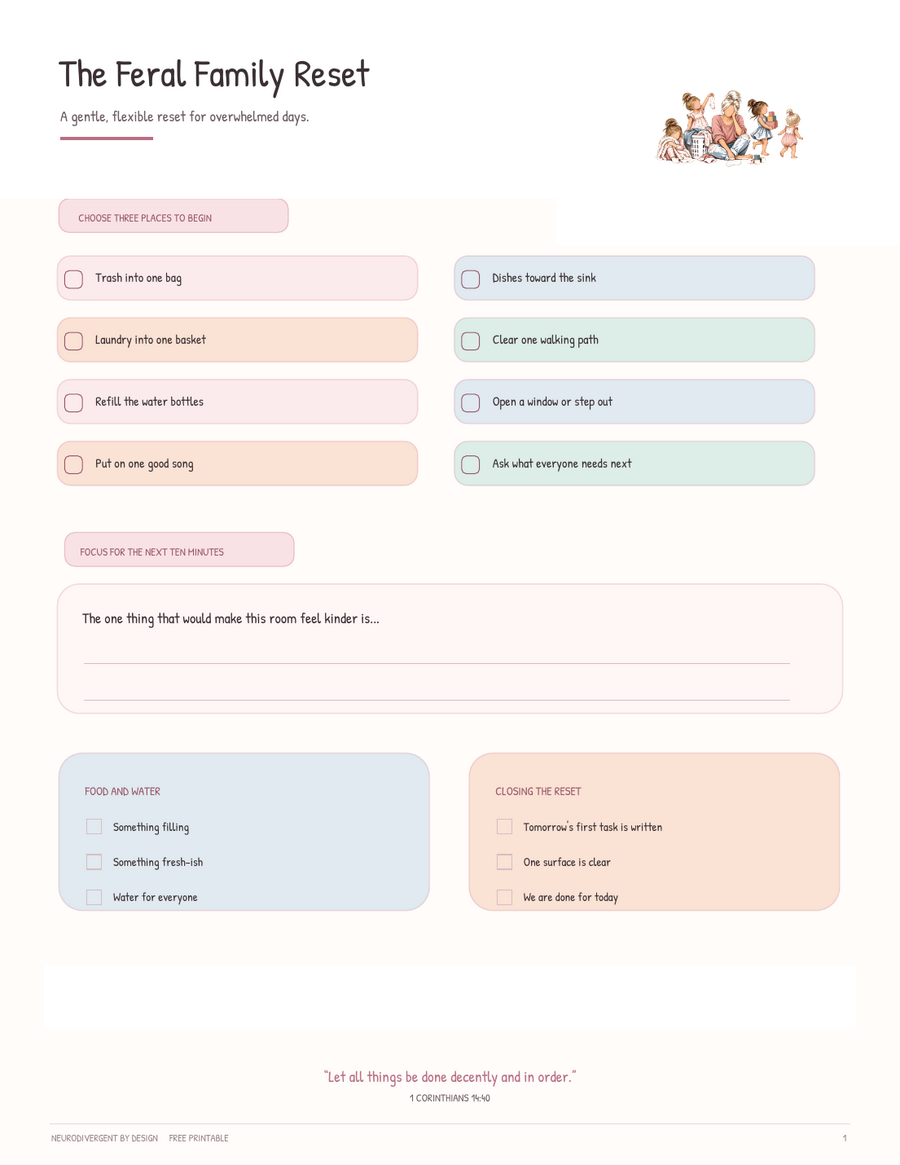
2-page printable
A calm, flexible reset that helps you choose a few clear starting points without trying to fix the entire house at once.
Download free PDF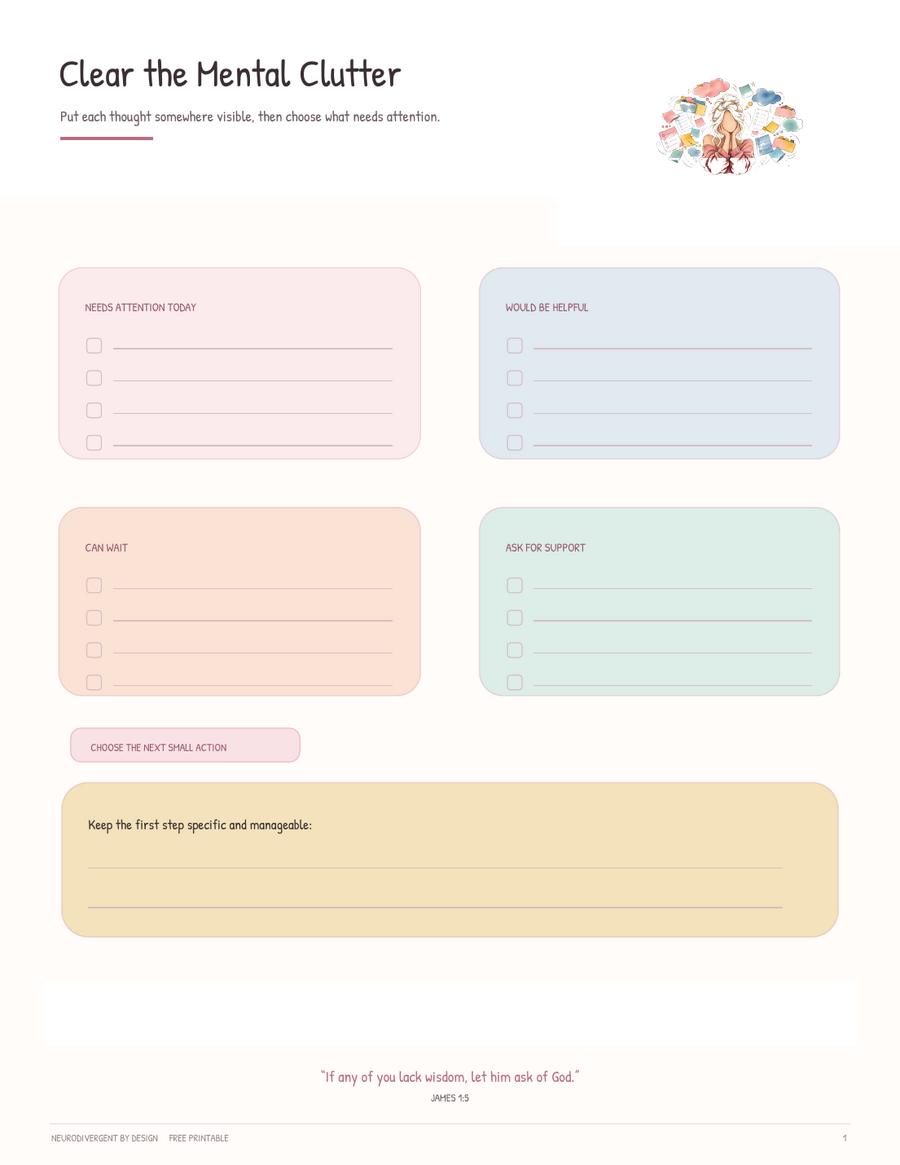
2-page printable
An ADHD-friendly brain dump that separates today’s needs, helpful tasks, things that can wait, and places to ask for support.
Download free PDF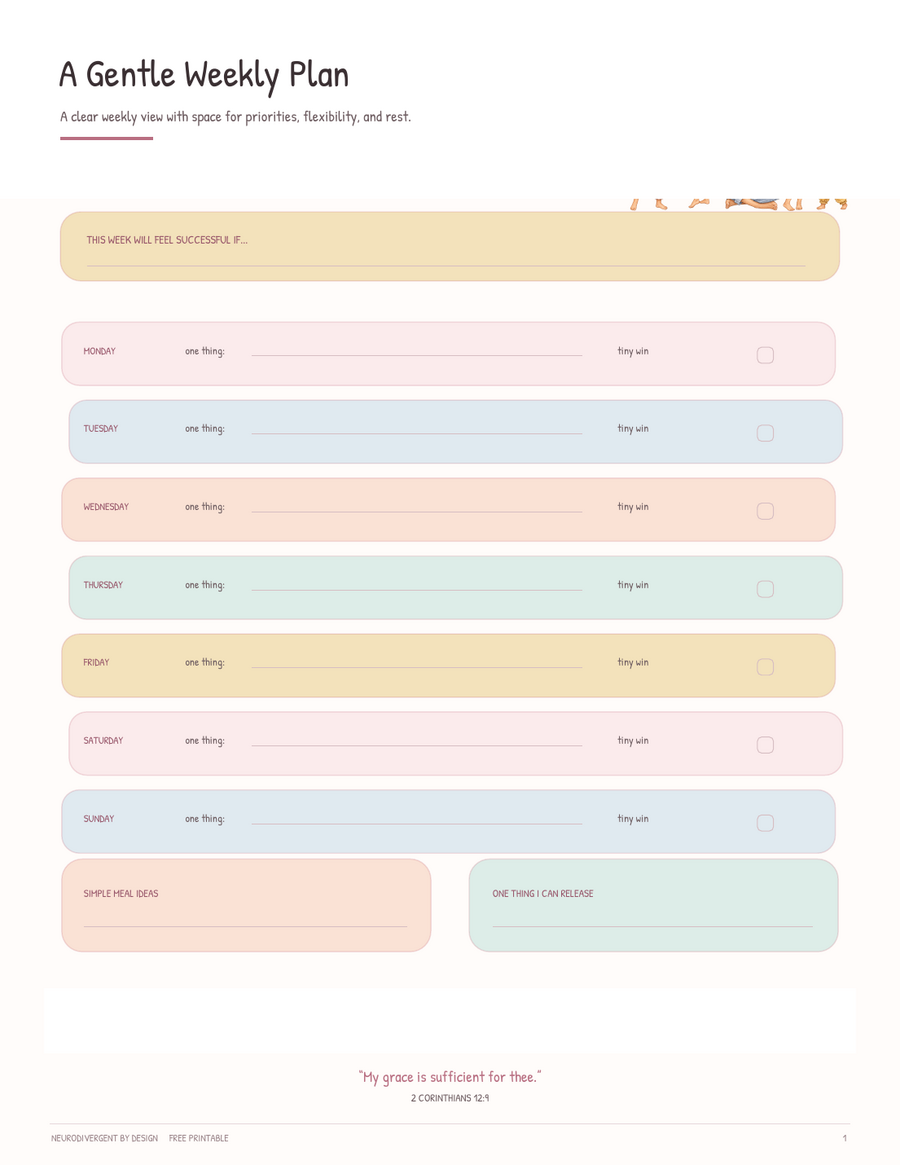
2-page printable
A clear weekly view with room for one priority each day, simple meal ideas, flexibility, reflection, and rest.
Download free PDF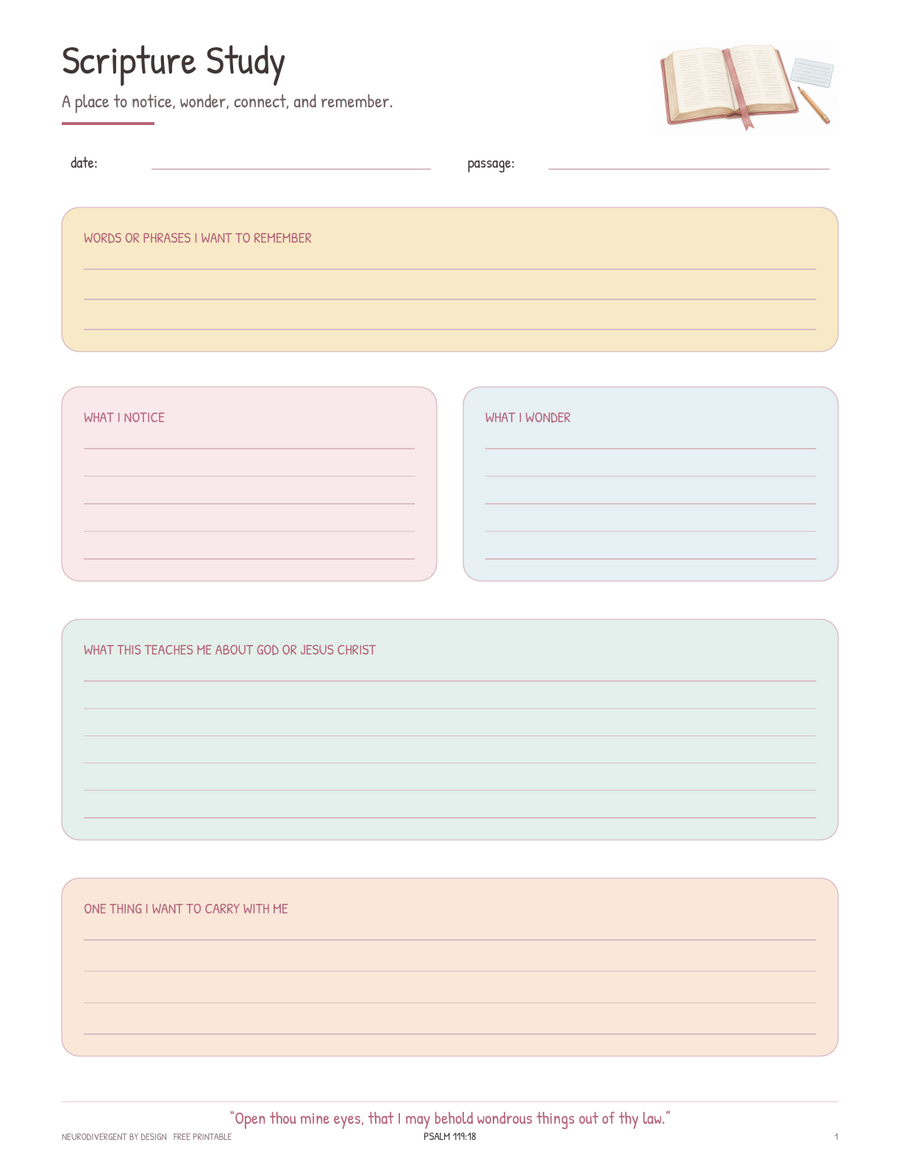
6-page printable
Roomy, calming pages for verse mapping, questions, impressions, context, looking for Jesus Christ, and gathering what you learned each week.
Download free PDF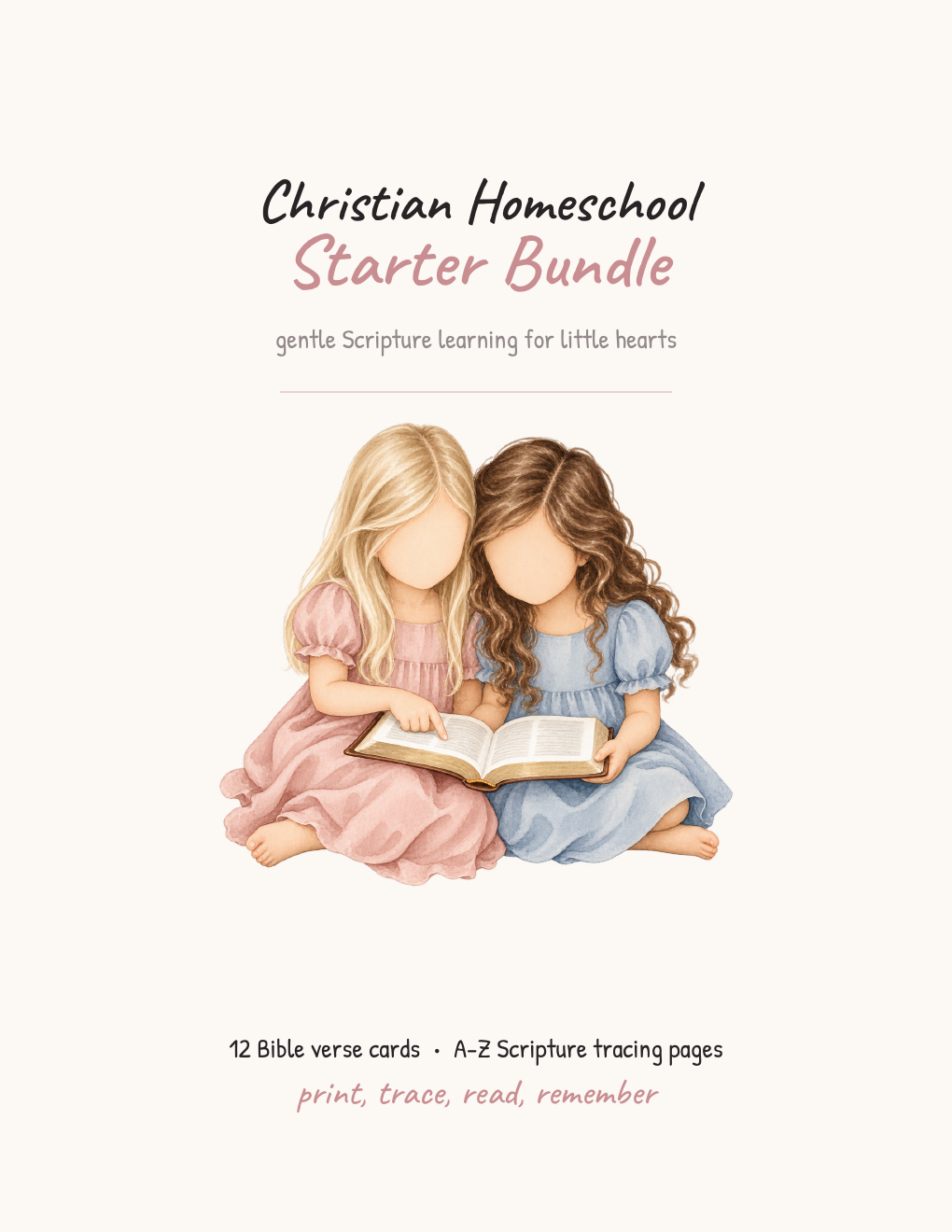
30-page printable bundle
Twelve Bible verse cards and A-Z Scripture tracing pages made for beautiful, low-pressure learning at home.
Download free PDF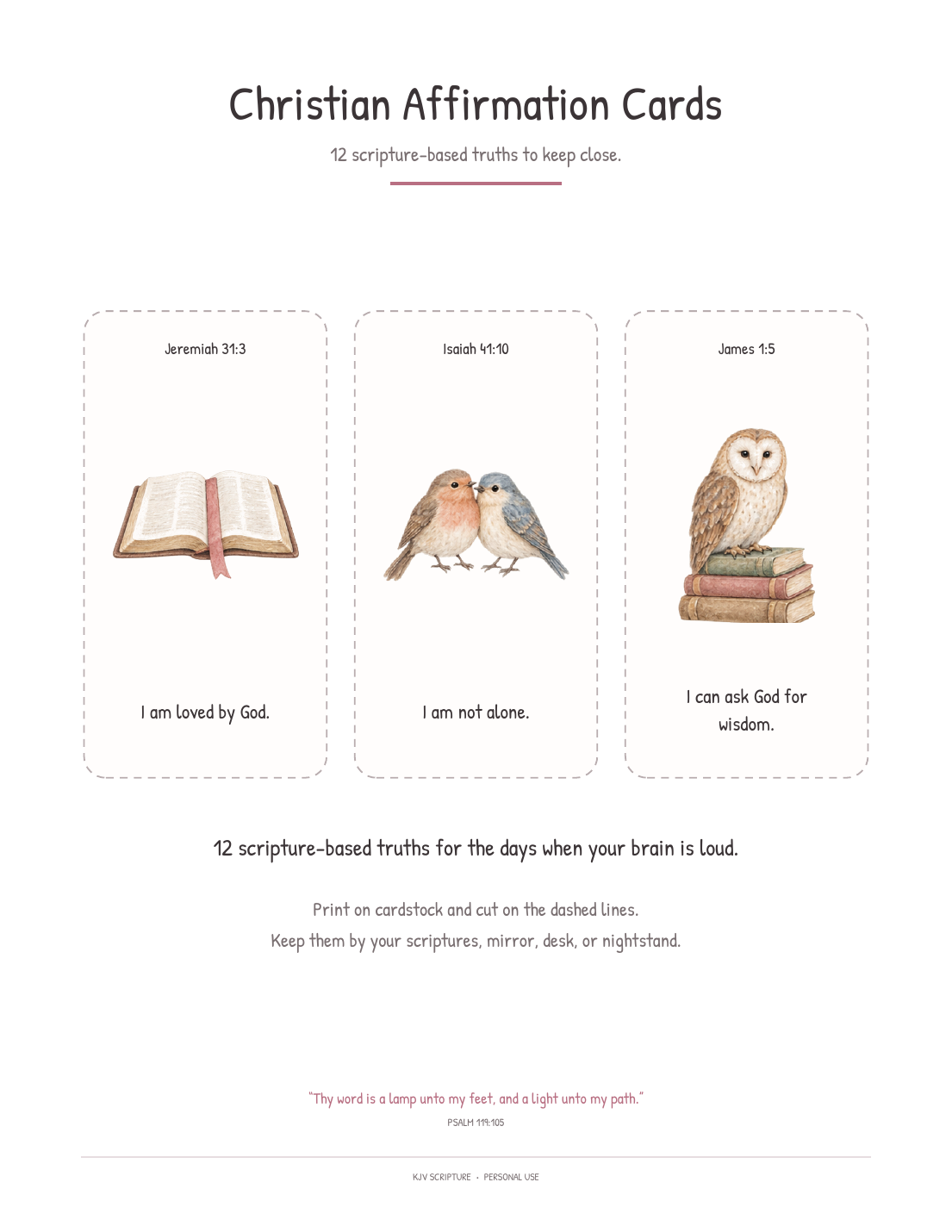
3-page printable • 12 cards
Twelve scripture-based reminders for days when your brain is loud, your confidence is missing, or you need truth you can actually hold onto.
Download free PDF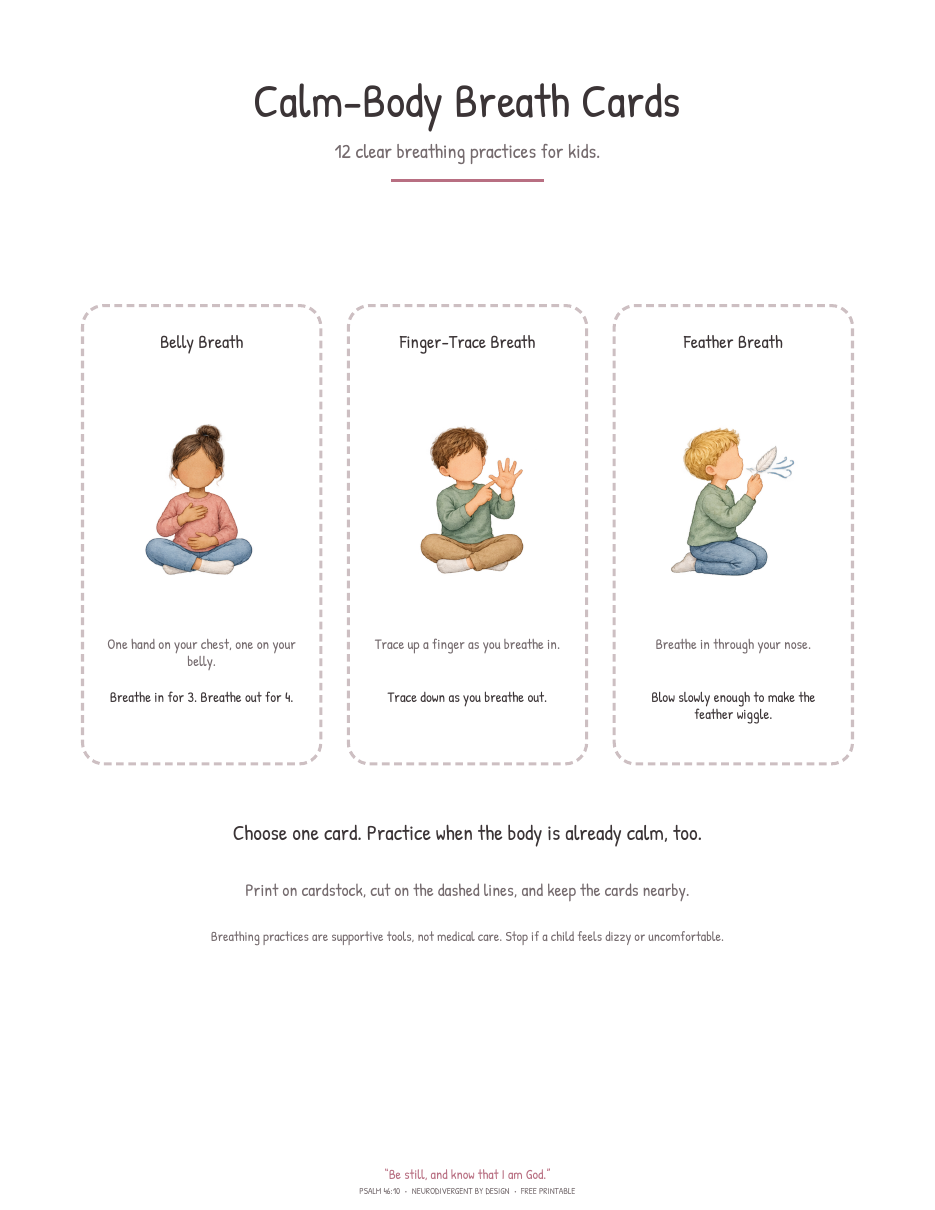
3-page printable • 12 cutout cards
Twelve clear, body-based breathing practices with faceless watercolor visuals and short directions children can follow one step at a time.
Download free PDF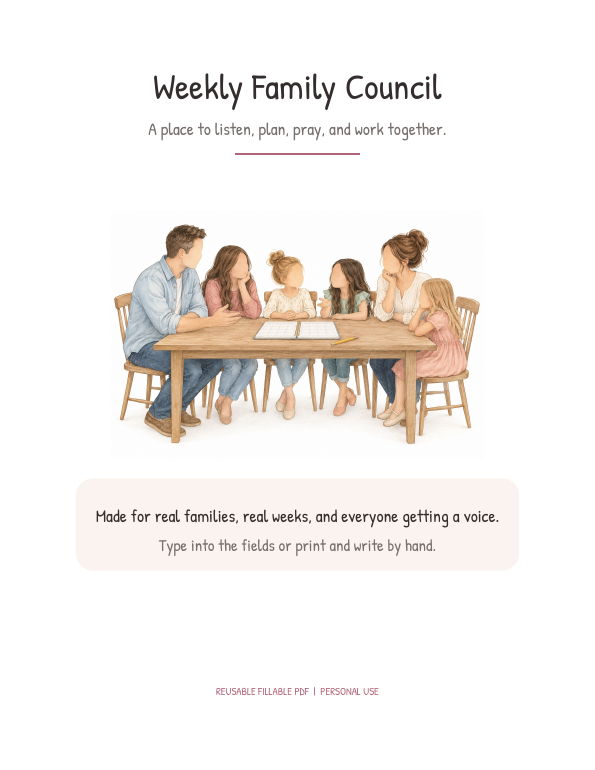
4-page fillable PDF
A reusable place to pray, hear every voice, review the week, work through family needs, and leave with a plan everyone understands.
Download free fillable PDF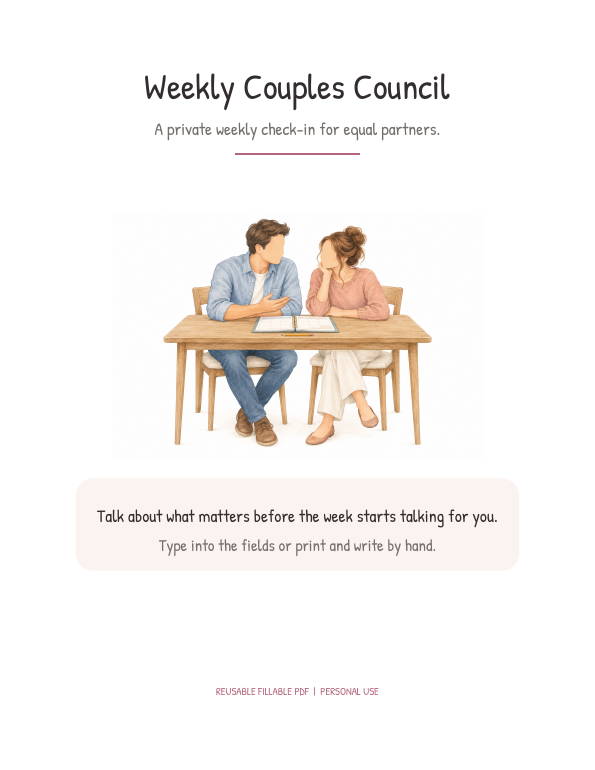
4-page fillable PDF
A private weekly check-in for equal partners to strengthen connection, discuss family needs, share responsibilities, and plan the week together.
Download free fillable PDFFor Homeschooling Neurodivergent Kids
Clear visual tools for mothers teaching children who benefit from predictable structure, sensory support, flexible expectations, and multiple ways to learn.
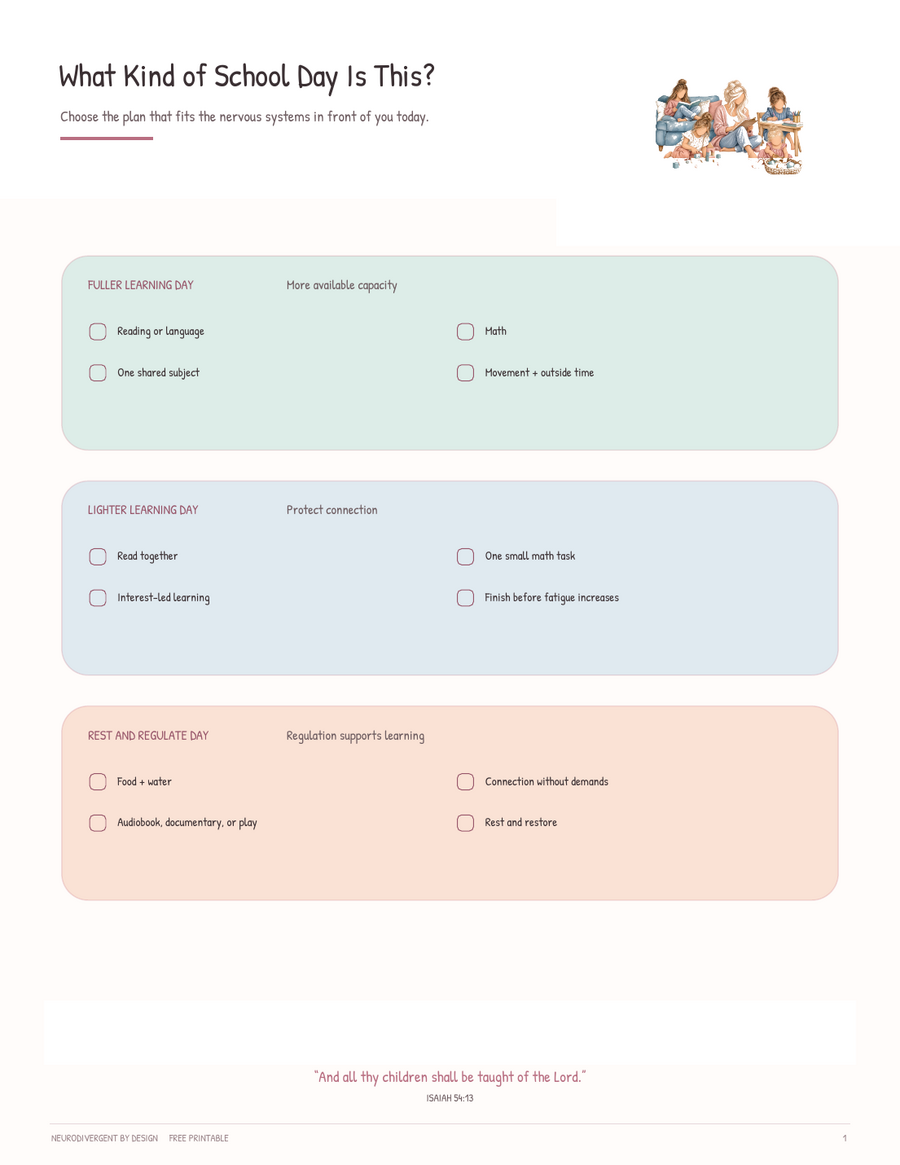
3-page printable
Choose a fuller learning day, lighter learning day, or rest-and-regulate day, then record the learning that happened beyond the lesson plan.
Download free PDF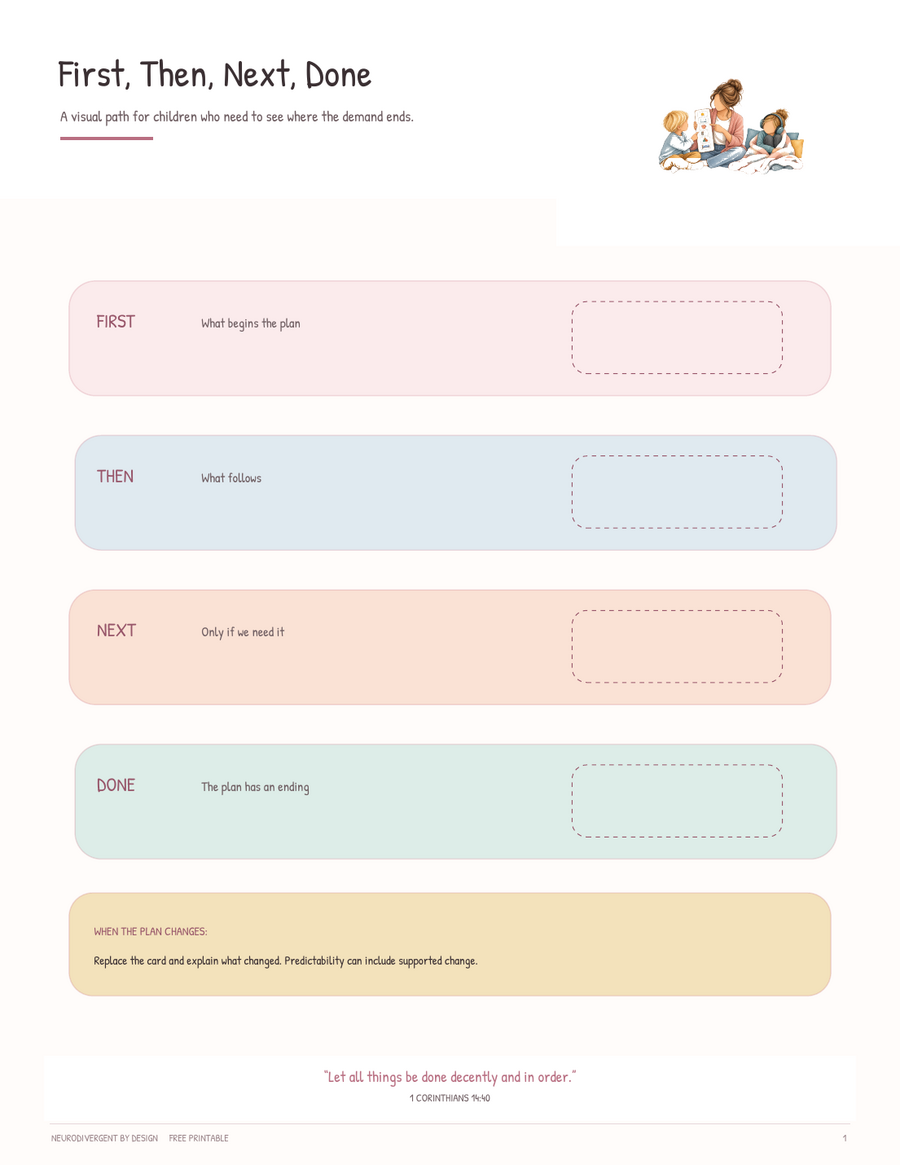
3-page printable + cutouts
A reusable visual path with learning, break, movement, sensory, and blank cards for children who need to see where the demand ends.
Download free PDF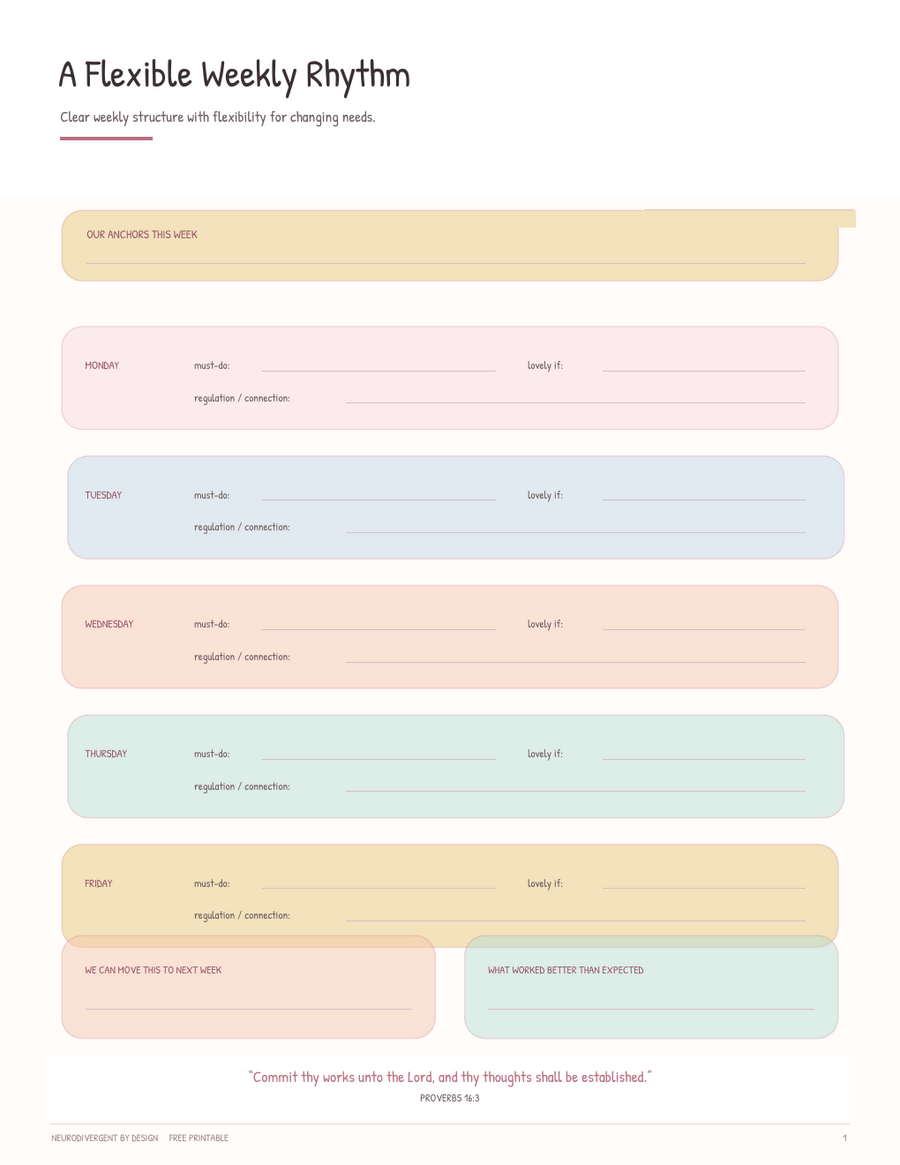
2-page printable
Separate must-do learning from “lovely if we get there,” track regulation and connection, and build from your child’s current interests.
Download free PDF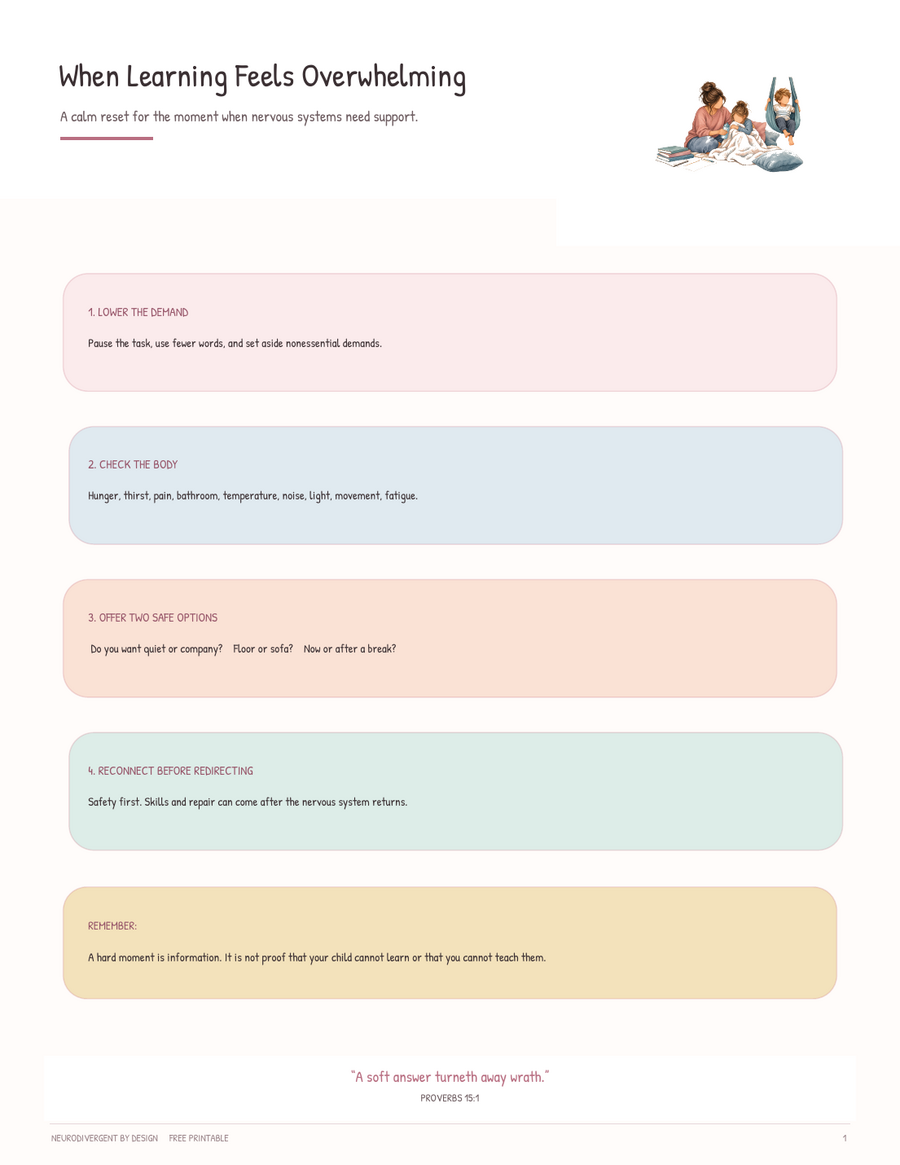
2-page printable
A compassionate reset for lowering the demand, checking sensory and physical needs, and reconnecting before returning to learning.
Download free PDFVisual Supports for Neurodivergent Kids
Reusable Velcro boards and watercolor visual cards for changing routines, transitions, communication, sensory needs, and calm-body choices.
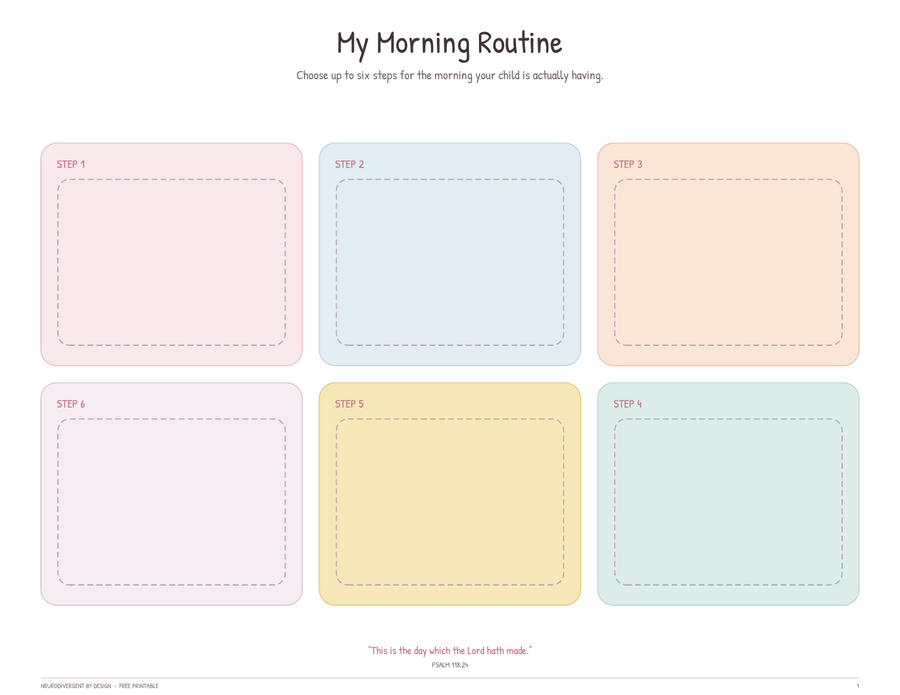
12-page printable + 42 large cutouts
Four full-size Velcro boards for morning, school, chores, and night, with large watercolor cards made to fit the board spaces exactly.
Download free PDF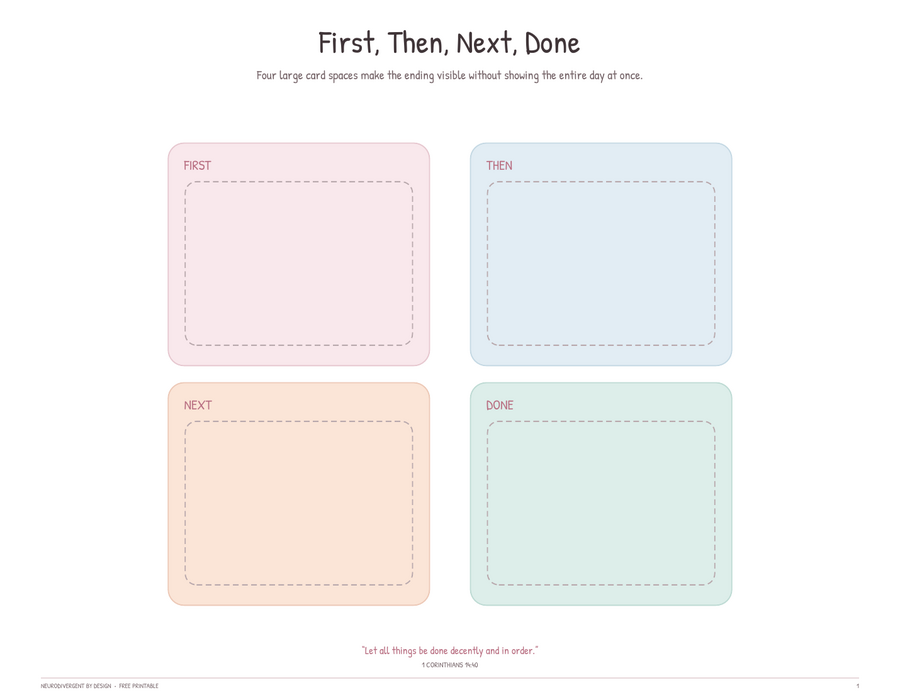
4-page printable + 16 large cutouts
A short visual path with four full-size Velcro spaces and large homeschool, appointment, movement, sensory-break, and all-done cards.
Download free PDF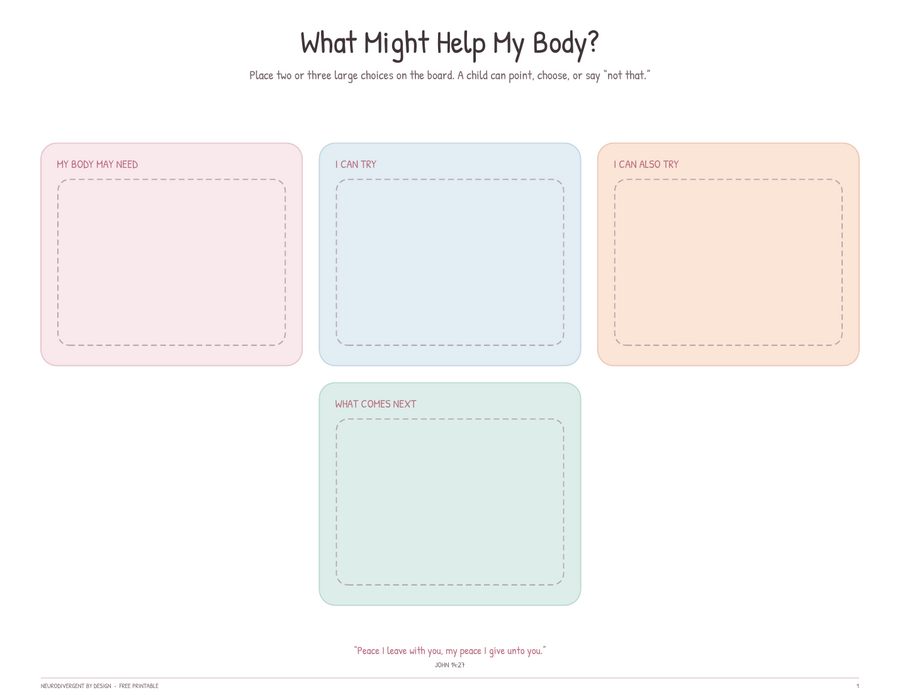
4-page printable + 16 large cutouts
A practical visual choice board with full-size Velcro spaces and large cards for sensory tools, movement, quiet space, help, connection, and pause.
Download free PDFThe Feral Family Chaos Control Shop
Neurodivergent by Design is where all the things bouncing around inside my brain eventually become actual things other people can use.
The shop is a wonderfully random collection of homeschool printables, Christ-centered lessons, family keepsakes, nail-class resources, activities for children, and practical little tools made for neurodivergent families, overwhelmed mothers, chronic-illness days, and anyone else trying to create something meaningful while operating with approximately three percent remaining executive functioning.
There is no perfectly coordinated product plan here. I make what our family needs, what I wish had existed when I needed it, and occasionally whatever idea refuses to leave me alone until I turn it into a printable at an entirely unreasonable hour.
Everything is created with the same hope behind this journal: that it helps someone feel seen, makes a hard day a little easier, or brings a little more connection, laughter, faith, and beauty into the middle of real life.
Today my four-year-old dropped her little pink dog ball. I laughed and said, “Oh, you’re just so clumsy!”
She looked at me like I had just made a very serious accusation against her character.
“No! Me no clumsy!”
Then she pointed at the ball on the floor.
“Clumsy pink ball so clumsy! Silly clumsy ball!”
So the investigation is closed. She was an innocent bystander. The ball dropped itself, embarrassed the family, and really needs to get its life together.